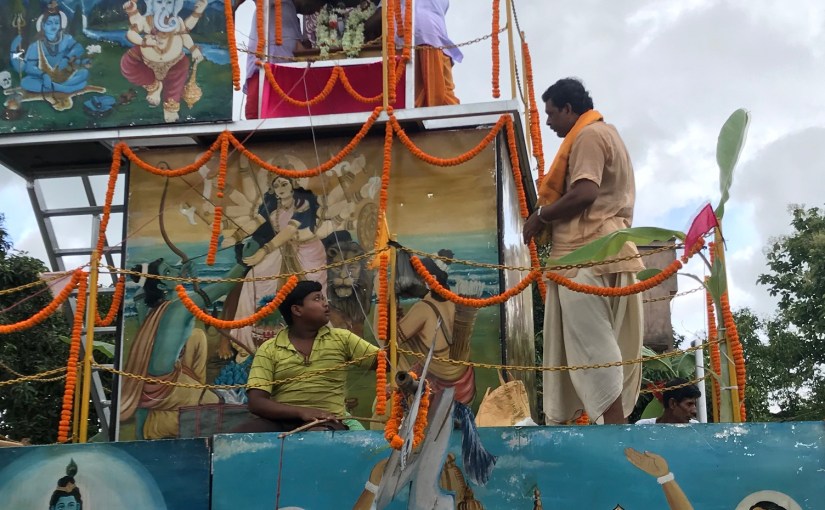
The village of Amadpur in Purba Bardhaman district of West Bengal is well known for Rathayatra or chariot festival.
Continue reading Rathyatra in AmadpurAbout

Radha Madhav Temple, Amadpur
Amadpur, a village in Memari – I block of Purba Barddhaman district has a number of terracotta temples of which Radha Madhav Temple deserves mention.
Continue reading Radha Madhav Temple, Amadpur
Madan Gopal Temple, Amadpur, Purba Bardhaman
Amadpur, a village in Memari – I block of Bardhaman Sadar South subdivision offers a unique collection of terracotta temples of varying shapes and sizes.
Continue reading Madan Gopal Temple, Amadpur, Purba Bardhaman
Temples in and around Joypur, Bankura
Bishnupur in Bankura district of West Bengal is famous for terracotta temples. But the temples of Joypur roughly 16 kilometers away has slipped into oblivion. The most prominent temple – Gokulchand Temple (an ASI protected monument) of Gokulnagar deserves mention. It is the largest laterite stone temple of the district.
Continue reading Temples in and around Joypur, Bankura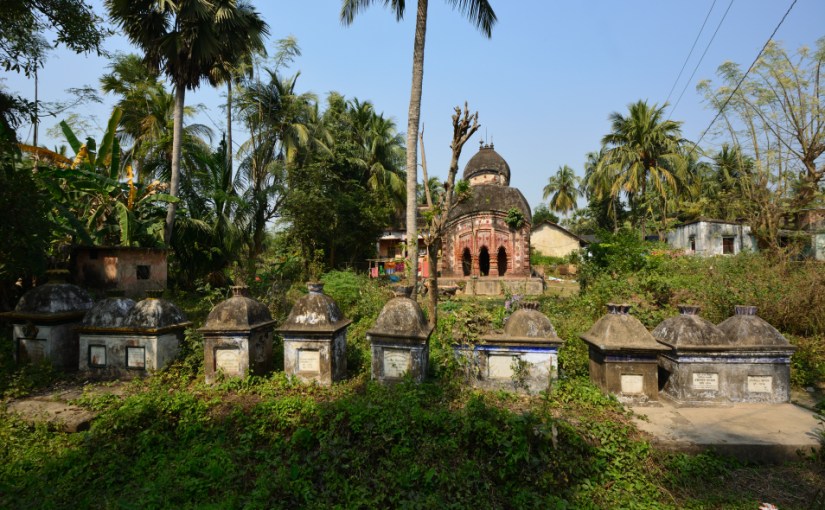
Temples of Jhikira, Howrah
This year in February I had been to the village of Jhikira in Amta II block of Howrah district to witness the terracotta temples of the region. After visiting the temples of Rautara, I crossed the road and came to the other side. I had to walk through the village road in search of temples. This area has a number of temples and according to David McCutchion “the temples of Howrah are an extension of those predominating in the adjoining district of Hooghly”.
Continue reading Temples of Jhikira, Howrah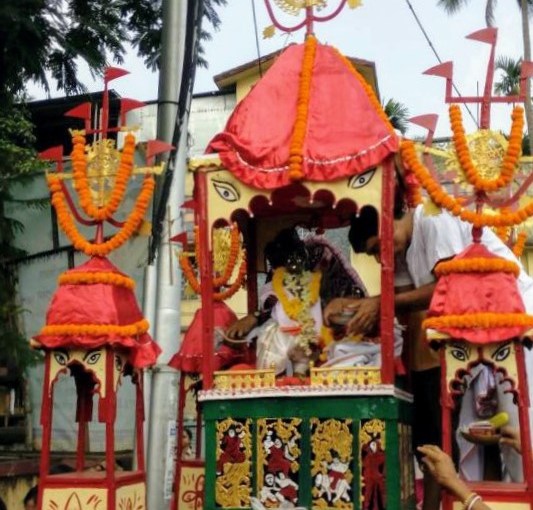
Rathayatra in Akshay Tritiya at Telinipara, Bhardreswar, Hooghly
Bhadreswar, a municipal town of Hooghly district of West Bengal can be reached both by road and rail. It is roughly forty minutes from Howrah by train in the Howrah-Bandel section of Eastern Railway. This industrial town finds mention in Bipradas’ Manasamangal. During the medieval times this area was a renowned seat of Sanskrit learning.
Continue reading Rathayatra in Akshay Tritiya at Telinipara, Bhardreswar, Hooghly
Rathayatra of Dasghara
Hooghly district of West Bengal is famous for Rathayatra – Mahesh in Serampore, Guptipara and Dasghara to name a few. Last year I was pretty lucky to visit Dasghara in the afternoon. It was a very hot and humid day. I took a train from Howrah and reached Tarakeswar at about quarter to two in the afternoon. Then I went to the bus stand and boarded a bus going to Dasghara. I sat by the window and when the bus started, I found after some time the landscape changed from urban to rural. Yes, we are leaving the temple town of Tarakeswar. The bus was more or less packed; but nobody was standing. After some thirty minutes I got down at Bazaar para and started walking towards my destination.
Continue reading Rathayatra of Dasghara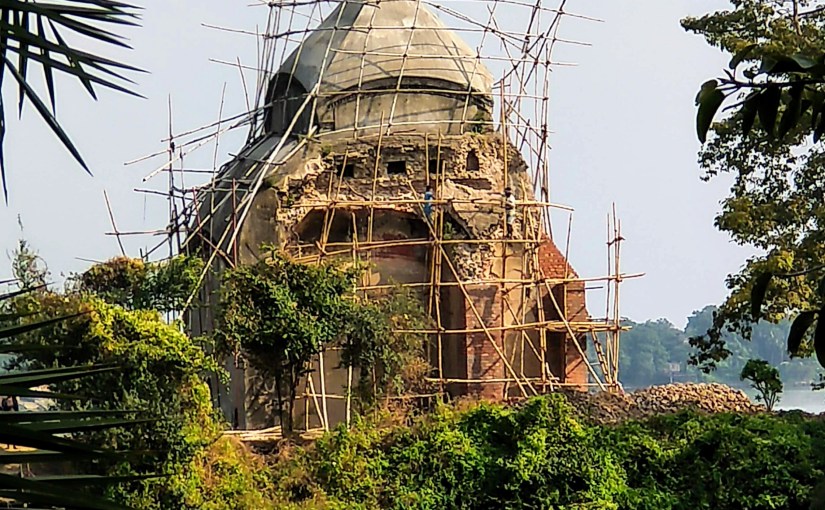
Henry Martin’s Pagoda
Serampore, a sub-divisional town in Hooghly district of West Bengal is only about 18 kilometres from Howrah. It is the eight station in Howrah-Bandel line of the Eastern Railway. The Grand Trunk Road passes through this town. The town can be reached either by road or by water; other than the rail route. This town has a rich history to offer. The Danes named this town as Fredericknagar in 1757 in the name of the then King Frederick V of Denmark.
Continue reading Henry Martin’s Pagoda
Shandeswartala Temple, Chinsurah
Chinsurah or Chuchura is the district headquarters of Hooghly. It is situated about 37 kilometers north of Kolkata by the western side of the Ganges. This town was previously a Dutch settlement till 1825. The town had a number of heritage monuments.
Continue reading Shandeswartala Temple, Chinsurah
Bhukailash Temple, Khidirpur
Situated in Khidirpur, in Ward No 79 of Kolkata Municipal Corporation (KMC) Bhukailash Rajbari is a prominent place where one will witness two big aatchala Shiva temples – Raktakamaleswar and Krishnachandreswar standing there from 1780 onwards and which have archaeological, architectural and historical significance. The temples along with the thakurbari including gateway of Bhukailash Rajbari is a Grade-I Heritage of the KMC.
Continue reading Bhukailash Temple, Khidirpur Blog of Kinjal Bose
You must be logged in to post a comment.