
Durga Puja is celebrated in many places of West Bengal of which Mitra Bari at Antpur in Hooghly district is famous not only as because it is being held for more than three centuries but because the puja is held in a dochala type of chandimandap made of wood with superb wooden works of not only gods and goddesses but also floral designs which exists till date.
Antpur, a village in Jangipara block of Serampore subdivision of Hooghly district has many temples of which Radha Govinda Temple built in 1786 and the chandimandap built in 1747 both by local zamindar Krishnaram Mitra, grandson of Kandarpanarayan Mitra deserves special mention.
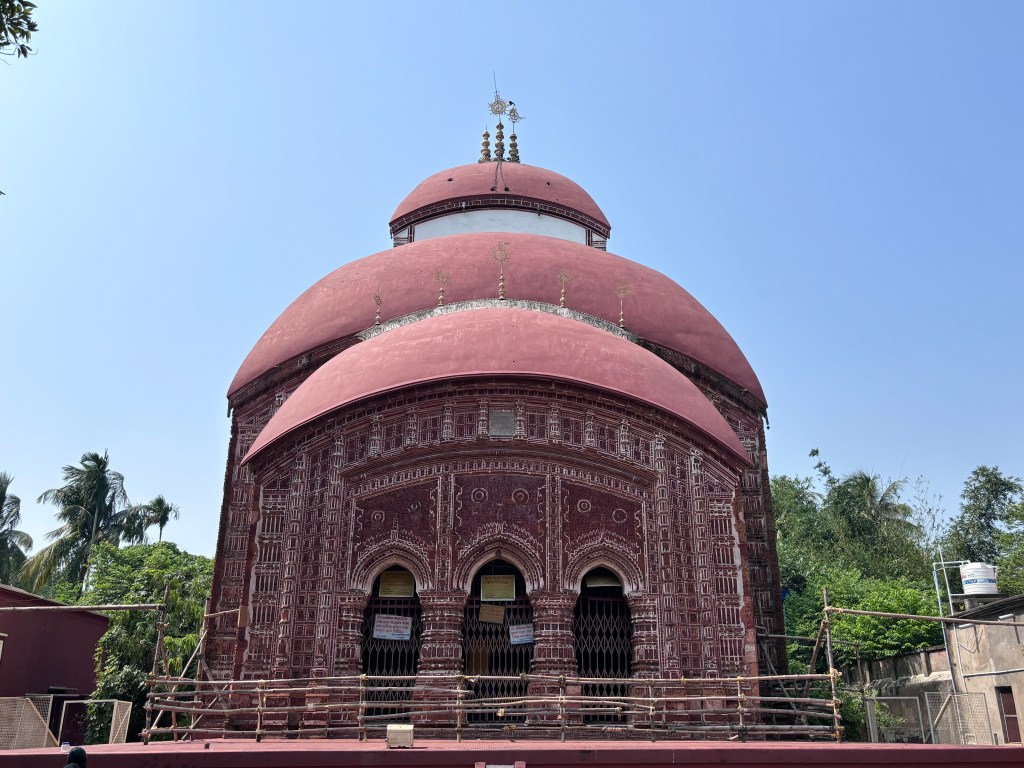
Radha Govinda Temple is a state-protected monument. It is a brick-built temple of aatchala type with a charchala porch having triple entrance on a raised platform with exquisite terracotta works. A blue signboard says that “Restoration and Conservation work of Radha Govinda Temple & Chandimandapa of Antpur, Hooghly was carried out by the Directorate of Archaeology & Museums, …… during 2019-2020”. It is clear that chandimandap was built roughly four decades before Radha Govinda Temple. But Durga Puja at Mitra Bari started much earlier in 1090 Bangabda ie, 1683 according to Gregorian calendar. The puja was started by Kandarpanarayan Mitra who was the grandfather of Krishnaram Mitra.
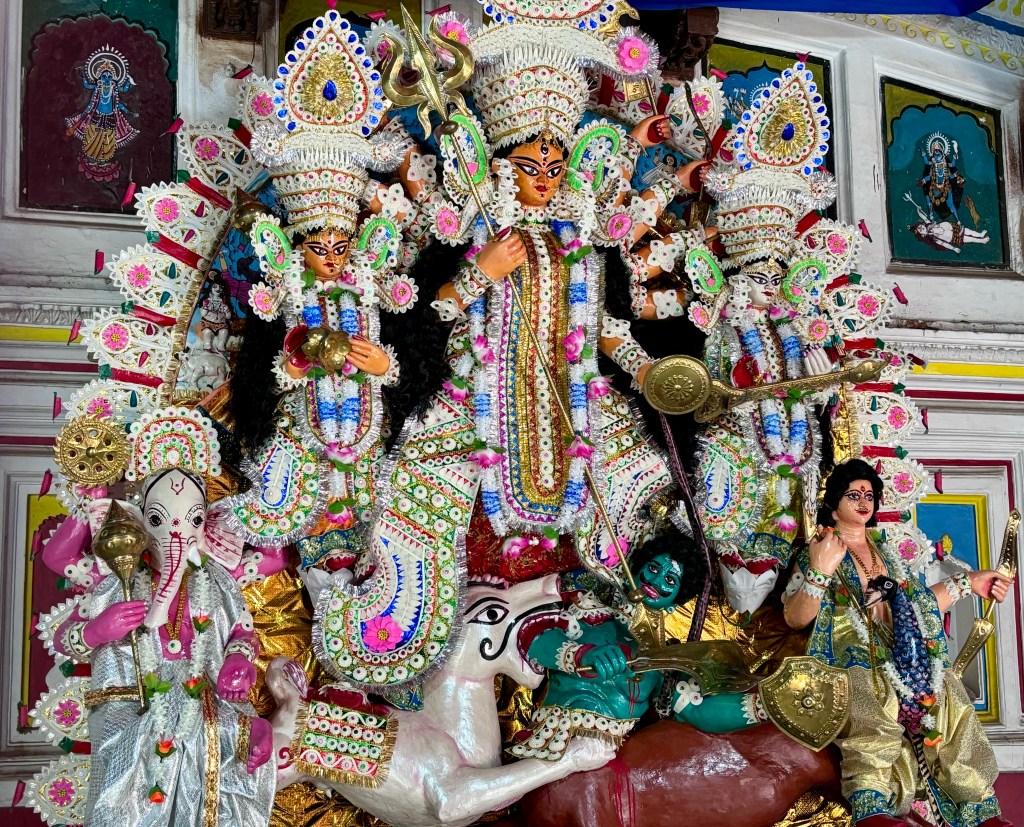
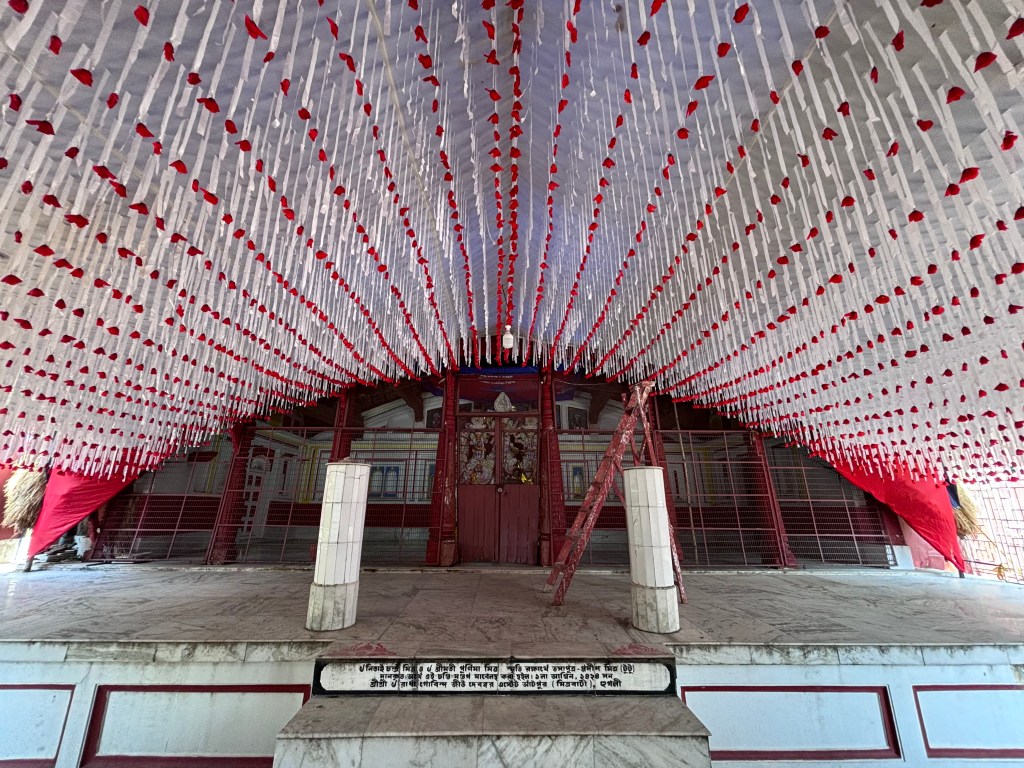
The chandimandap where Durga Puja is held is in a raised platform. A flight of stairs lead you to the mandap. Apart from Durga Puja, Kali Puja is also celebrated here. Last year I along with my family was invited by Shri Sudip Mitra, family member and we paid a visit on Sasthti though I visited it twice before but not during the time of puja. The chandimandap was beautifully decorated on the occasion of the puja.
Shri Mitra even showed and explained to me the different terracotta panels of Radha Gobinda Temple. I was amazed to see such beautiful terracotta decorations and most of the panels are intact till date. I am sharing one of the panels which depict Goddess Durga with his sons and daughters.


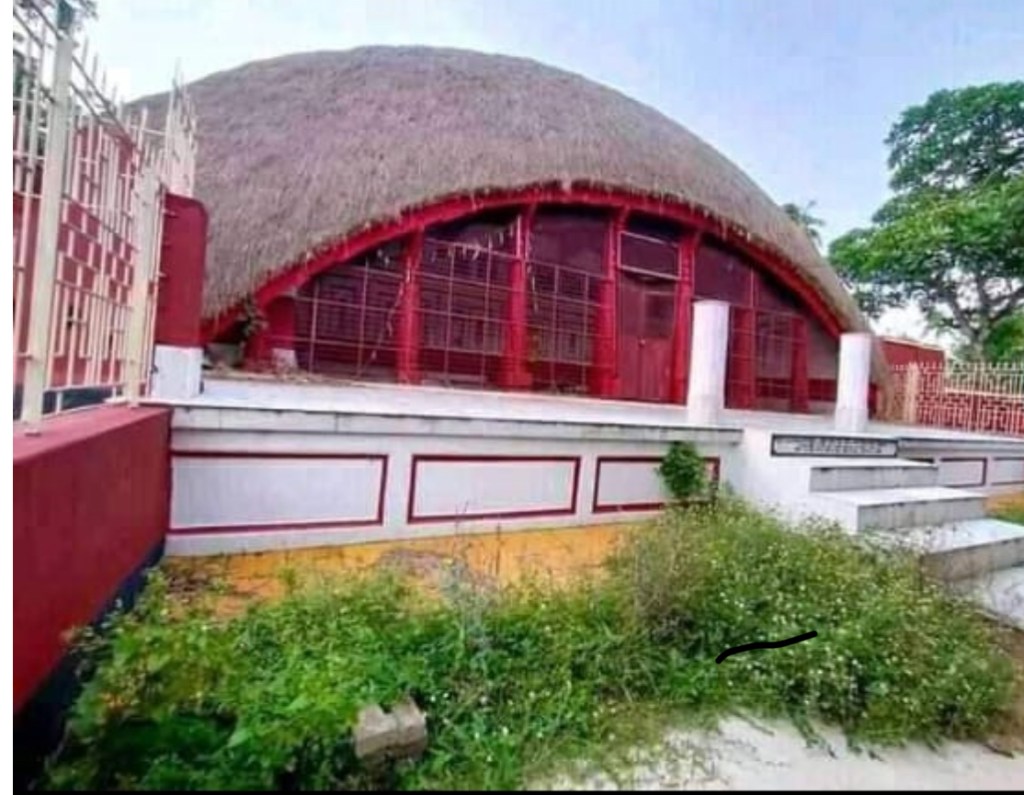
The chandimandap is made of kathal kath with the roof made of hay. It is really remarkable to look at. One can witness wooden pillars and exquisite wood works inside the mandap and what is remarkable is that it still exists today which also shows the exquisite craftsmanship of the artisans of that age. Most of the works are intact. The puja is held following Shakta rituals. Previously there was animal sacrifice but according to Shri Mitra it was stopped for the last forty years or so. Kathamo puja was held on the day of Nandautsav which happens to be the following day of Janmastami. A close look at the Durga idol reveals that the colour of asur is green and the lion is horse-faced. Kartick is not having any mukut while others are having the same. All these things make the puja unique. Kumari Puja is held on the day of Mahanavami. The goddess is not offered annabhog like other bonedi households; instead in the morning atap chal, fruits and sweets made of coconut while at night luchi, suji and milk.
The visit to Anur can be clubbed with a tour to Temples of Rajbalhat and Avaya Durga, Silbari, Rajbalhat which is little more than five kilometres from Aatpur in a single day.
Going there: Take the Howrah-Tarakeswar local and get down at Haripal station. From there either you can board the crowded trekker or simply reserve an auto or a toto and reach Antpur/Rajbalhat. It can also be reached by road from Kolkata.
Special thanks to Shri Sudip Mitra.
Date of posting: 9th October, 2024.
Date of updation: 6th October, 2025.

 Blog of Kinjal Bose