
The district of Birbhum has a number of terracotta temples of which Radhabinod Temple at Joydev Kenduli in Ilambazar block deserves special mention. This brick-built nabaratna temple houses the idols of Radhabinod and Radhika and has excellent terracotta works on its facade.
A protected monument under ASI, Kolkata Circle, this south-facing nabaratna temple “with ridged turrets” has two entrance – the main being in the south while there is another entrance in the east. This temple, unlike other temples, is not on a raised platform but stands almost at ground level.

There is a saying that the current temple was built by Maharani Nairani Devi of Bardhaman Raj family either in 1683 or in 1692; but according to the signboard of ASI, it is mentioned that the mandir was built Kirtichand Bahadur of Bardhaman in 1683 A.D. It is also believed that the current temple stands at the place where the house of the famous 12th century poet Joydev existed.

Joydev, court poet of Lakshman Sen, was famous for the composition of Geet Govinda. The village of Kenduli is believed to be the birthplace of the poet Joydev. This is debate as some believe that he was born at Kenduli Sashan in Odisha. On the auspicious occasion of Makar Sankranti (last day of the Bengali month of Posh), a fair is held for three days and the place gets crowded with devotees, pilgrims, people of all age groups and also with bauls.
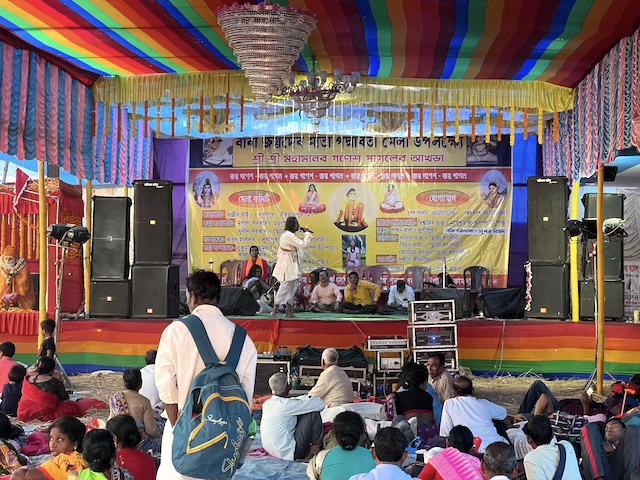
Last year at Posh Sankranti I visited Joydev Kenduli. I boarded Maa Tara Express from Sealdah station at 7:20 am and reached Bolpur Shantiniketan at around 10:40 in the morning. I had previously made arrangement for a car which took me to Kenduli which is roughly about 30 kilometres from the station in less than an hour’s time. Before reaching the fair ground we had to park the car at a suitable place and its rather difficult to find a parking area as the same got filled up with cars, totos, buses, autos and even two wheelers. I had to walk roughly for five hundred metres and reach the temple of Radhabinod. As I am approaching I found temporary shops on both sides.
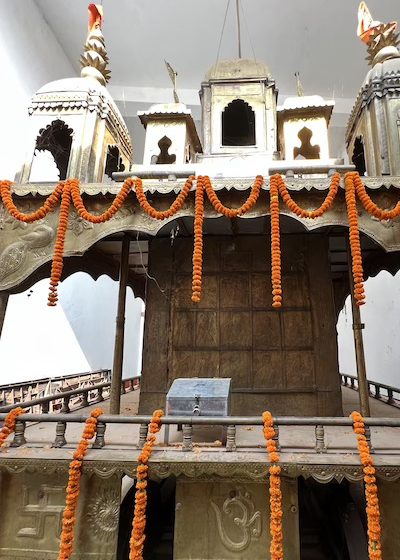
There had already been a very long queue near the temple as devotees had lined up to offer puja. I offered my pranam from outside the temple. From there I had to walk through the crowded road leading to the river Ajoy. There I found a number of akhras and people are listening to songs inside them. This is the place where many Bauls come and sing throughout the night. At one place I found a brass chariot and the same was decorated with garlands. At the foundation plaque the date was mentioned, and it was 25th Aashar, 1298 (ie, mid July 1892). I reached the bank of the river and found people getting down into the waters of Ajoy. I sprinkled the waters on my head and surprisingly found the water to be not that chilly as it should have been. Of course it may happen that as because it’s close to noon, that is the reason why the water feels partly warm. I also found a couple of boats anchored near the river bank. It was really a wonderful experience to visit there on that day and feel the ambience there. I enjoyed every bit of it. It was really an experience to cherish.

On my return from the river I found sadhus, bahurupi, baul singers and kirttaniyas. I also spotted two temples of charchala (four sloped roof) type placed side by side on a raised platform and both of them got a fresh coat of paint.

There is another temple which is of anomalous type and can be termed as “a modification of ratna design” close to the river dedicated to Kusheswar Shiva. This temple has also received fresh colour as that of the twin charchala temples. I found many devotees offering puja there. Now coming back to Radhabinod Temple. Like other temples, it has a triple-arched entrance and has exqusiite terracotta works on its facade.


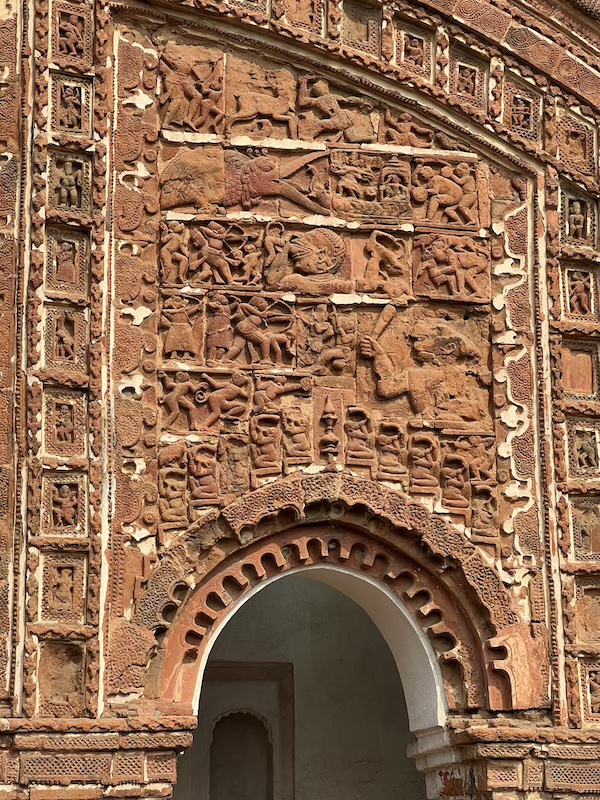
Despite the age of the temple most of the terracotta works on the panels have survived. The left panel depicts Shiva, Vishnu, Brahma, Indra, Agni, Yama and others. The central panels depicts the battle scene with Ram and Ravana and the right panel is rather interesting.
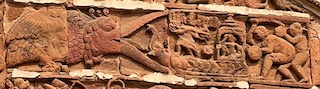
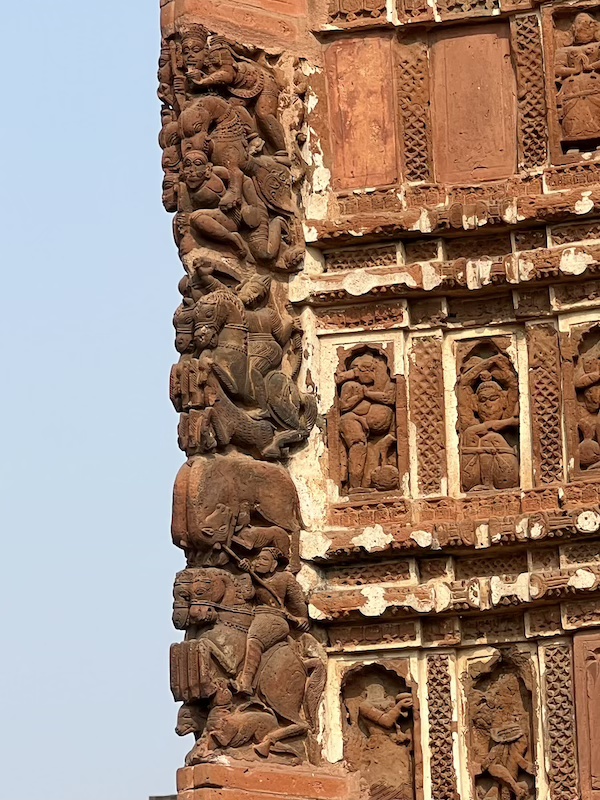
There appears to be a huge mythical bird – Suparsha trying to engulf Ravan’s chariot which finds mention in Ramayana written by Krittibas Ojha. Apart from that one will also find sadhus and dwarpal. One will come across mrityulata (death vine) in the corners of the temple wall. This scene is rather a common feature in most of the terracotta temples of Bengal.
Many consider it holy to get a dip in River Ajoy on the day of Makar Sankranti. It was said that poet Joydev had to walk long to take a dip in the Ganges. Due to age, it’s rather difficult for him to cover that long distance. Lord Vishnu, moved by this, asked the Ganges to start flowing in the backward direction to River Ajoy on the holy day of Makar Sankranti.
On my way back I paid a visit to Gopal & Lakshmi Janardan Temple, Ghurisha, Birbhum and Hathtola Mahaprabhu Temple, Ilambazar, Birbhum which can be clubbed along with the tour to Joydev Kenduli.
Going there:
It is better to take the morning train either from Howrah or Sealdah station and reach Bolpur Shantiniketan. If one plans to visit there during the fair time, it will be better to hire a car from Bolpur for a comfortable journey. One may also include the temples of Ilambazar area during the return journey. Alternatively, one can also take a toto and reach Jambuni bus stand and take a bus and reach there. It can be splendid one-day trip if it is planned well in advance.
References:
- Brick Temples of Bengal – David McCutchion
- Birbhum Jelar Purakirti – Debkumar Chakraborty
Date of posting: 15th January, 2024.

 Blog of Kinjal Bose
Thank you Mr. Bose for presenting such an interesting article
LikeLiked by 1 person