
Durga Puja is celebrated in a grand way in many zamindar houses of West Bengal. I have been travelling to such bonedi houses for the last few years. This year on Nabami I had been to Surul Sarkarbari or Surul Rajbari which is roughly 5 kilometres from Bolpur railway station in Birbhum. Here Maa Durga is worshipped in two houses – baro taraf and choto taraf with much splendour.
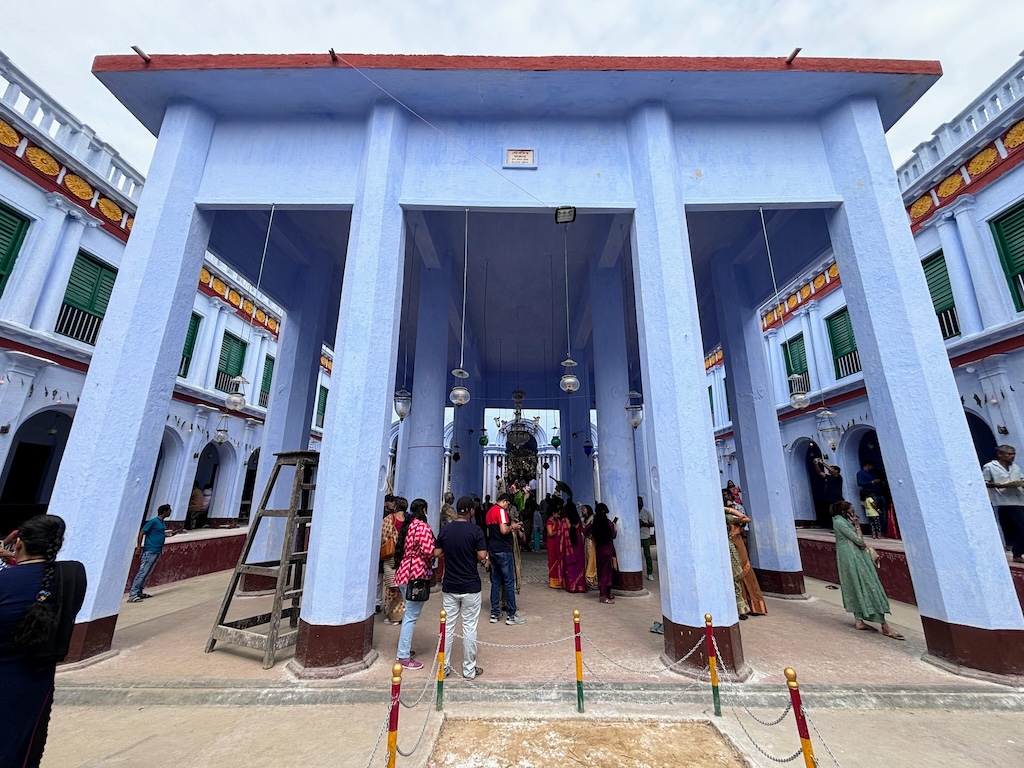
I reached Surul Sarkarbari at about 11’o clock in the morning. The road leading to the house is already crowded with people, many of whom have come from Kolkata. I also found a number of cars parked outside. In front of Surul Rajbari there are a number of temporary shops selling various items which take the form of a small fair. The weather was fine and people are enjoying a lot – after all its Nabami.
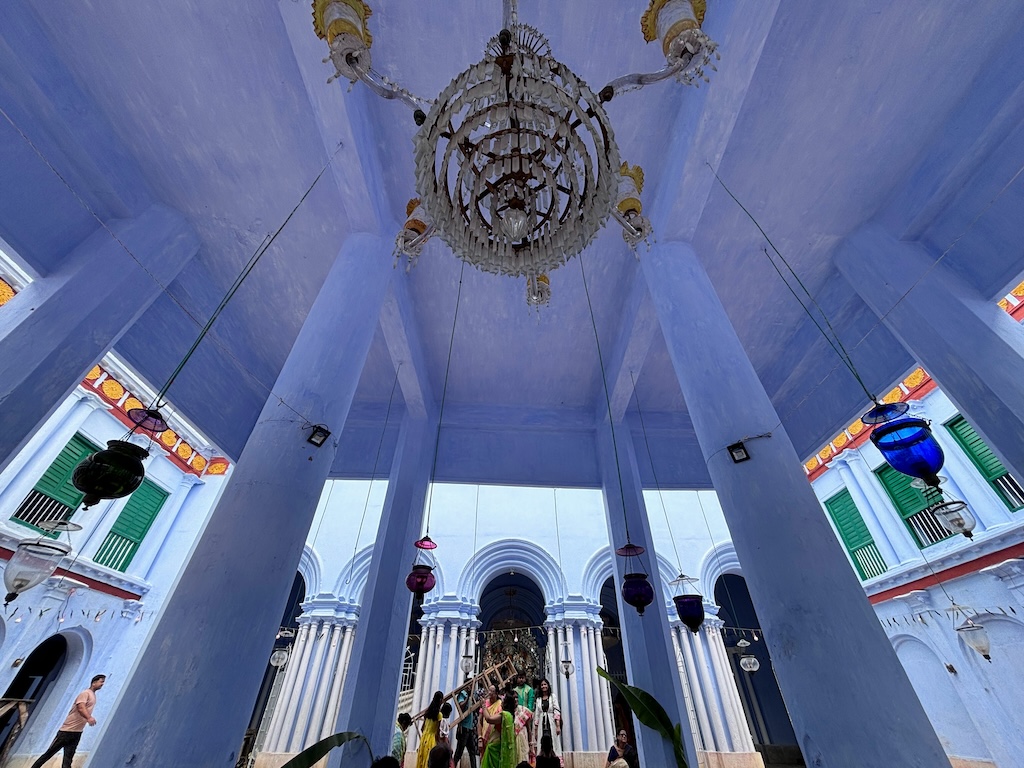
On entering Surul Sarkarbari (baro taraf) , I noticed a large courtyard with a natmandir in the middle. A large chandelier is hanging from the top. There are a number of lamps made of Belgium glass hanging from the ceiling. I was told that these are lighted on castor oils. How nostalgic the ambience will be in the evening when this massive thakurdalan along with natmandir are lighted with these lamps.
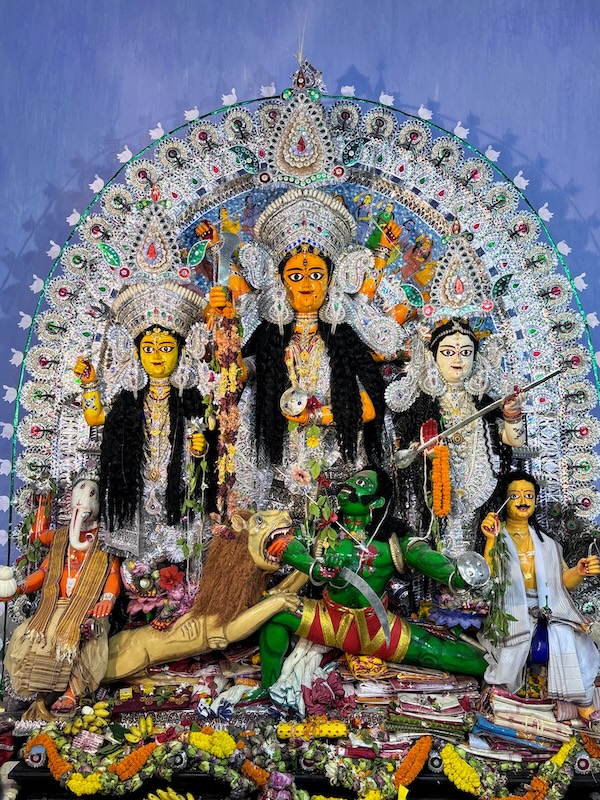
When I went there I found that the priest is still there though Nabami puja has just ended. I met a family member who was kind enough to tell me about this puja. According to him, the puja which is about 290 years old is held following the shakta rituals. Like other bonedi houses the protima is prepared in this dalan after performing kathamo puja on the auspicious day of Rathayatra.

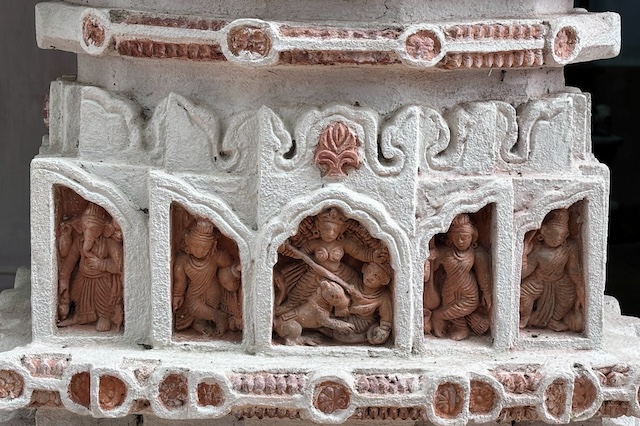

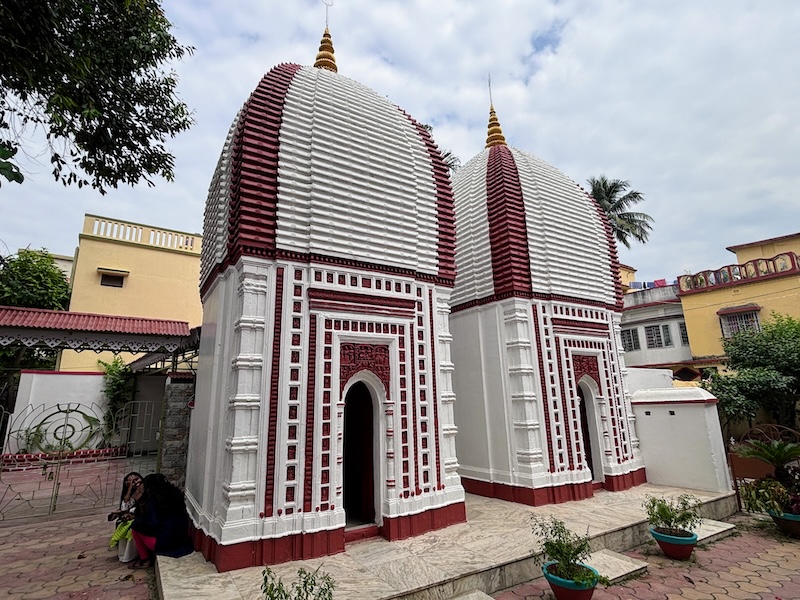
There is a pancha ratna terracotta temple dedicated to Lakshmi Janardan and two deul shaped temples dedicated to Lord Shiva outside the courtyard. In this respect I would like to say that I found two terracotta panels of Goddess Durga one in the pancharatna temple and another in the deul close to this. After completion of the puja of Lakshmi Janardan, the salagram sila is taken to another place and then animal sacrifice is performed on Mahastami though bali is held on Saptami and Nabami also. On Saptami, chalkumro (one type of vegetable) and on Nabami both chalkumro and sugarcane are sacrificed. I found an area earmarked for it outside the natmandir.
There is no annobhog but seasonal fruits and eighteen different types of sweets – all prepared in the household from Tritiya are offered to Maa Durga. According to him this dalan in baro taraf having stucco works was built by Srinibas Sarkar. Kumari puja and dhuno porano are not performed here. Another thing of this puja is that there is no sindur khela or vermillion play which is a common feature in both barowari and household pujas.

The puja of Sarkar Bari (choto taraf) is held in a separate dalan just on the back of Lakshmi Janardan Temple. The nabapatrika is carried on a palanquin by four Brahmins. Like baro taraf, the protima is prepared in thakurdalan following Kathamo Puja. I was told by a family member of choto taraf that earlier there happened to be one puja. He told me that both the protimas are prepared by the same artisan. Bali is performed on Mahastami. Luchi, sweets and fruits are offered to the goddess. Candles are previously used in the chandeliers to light the natmandir and thakurdalan but now the same has been replaced by electricity.
Going there: The best way to reach Surul Sarkarbari is to take the morning express train either from Howrah or Sealdah and get down at Bolpur station. From there you can take a toto and reach there. Alternately it can also be reached by car. I personally boarded Maa Tara Express from Sealdah station at 7:20 am and reached Bolpur at 10:40 am.
Date of posting: 23rd October, 2023.

 Blog of Kinjal Bose
3 thoughts on “Durga Puja of Surul Sarkarbari”