
Durga Puja, the greatest festival of the Bengalees is not only celebrated as barowari pujas but it is equally worshipped in many bonedi households of Kolkata. But there are a few houses and temples in Kolkata where Maa Durga is worshipped round the year. In this post I shall include five such pujas though there are a few more houses or temples where Goddess Durga is worshipped daily, which I could not include in my post due to shortage of time.

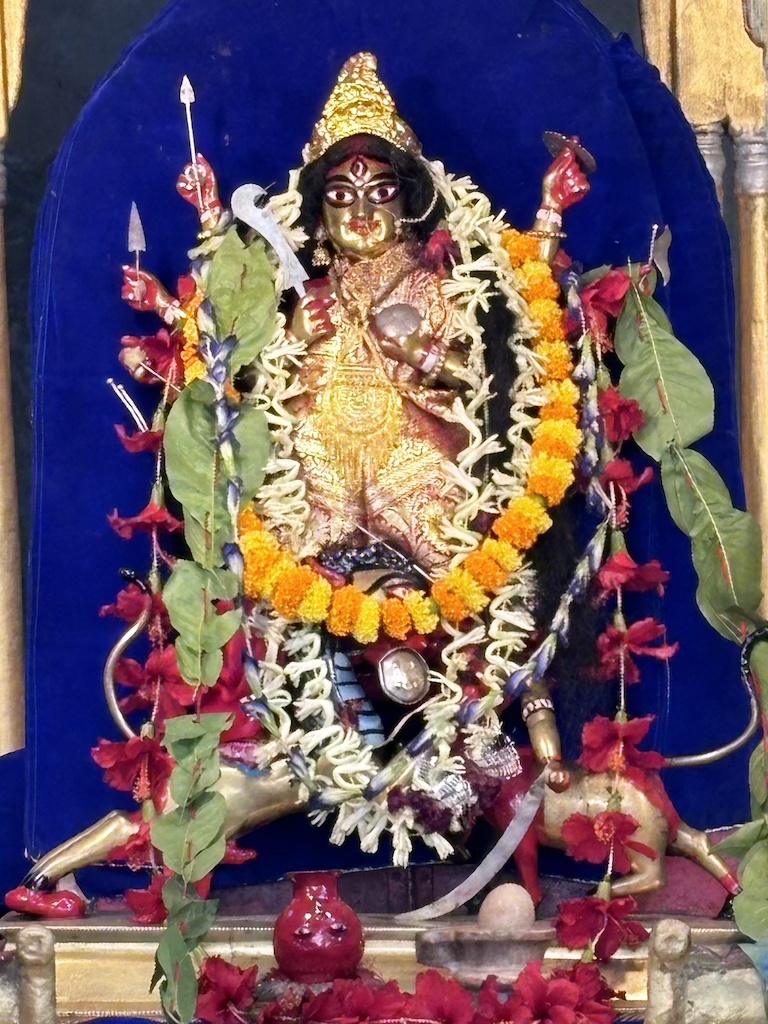
On the morning of the auspicious Saptami tithi this year, I paid a visit to five temples and houses where Devi Durga is worshipped round the year. One of them is the famous Chitteswari Temple near Cossipore. The idol of Shree Shree Joychandi Chitteswari is one of the oldest Durga idols.
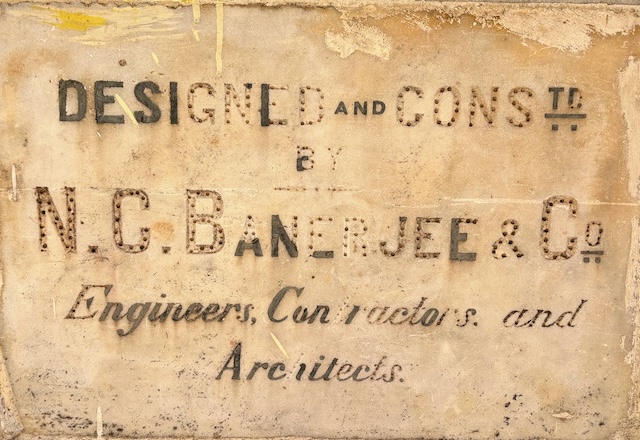
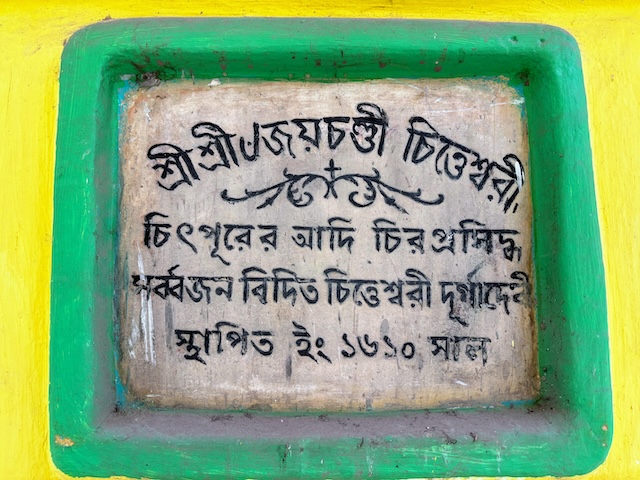
There is a stone plaque stating the foundation year as 1610 as per Gregorian calendar. I found also another plaque on the bottom right which states the name of a company, being the engineers, contractors and architects connected with the temple.
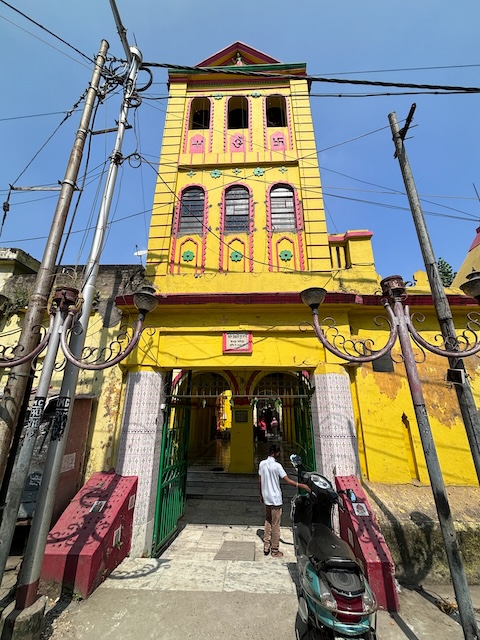
The story of this idol is known more or less to everyone. At that time this place was not like that of today. It was part of Sundarbans. It was full of jungles and there might be tigers. Why am I referring it is because if you look carefully at the idol of Chitteswari you will notice a tiger at the foot of the goddess. The idol was carved out of neem wood. The place Chitpur got its name from the name of the goddess. The temple was built by Zamindar Manohar Ghosh. The idol was worshipped at one point of time by Chitteswar Roy (Chittu). After the demise of Chittu, the idol was later discovered by Nrisingha Brahmachari, who happened to be a tantric. Daily puja is performed here but during the time of Durga Puja this area is more or less crowded with devotees. At the time when I visited the temple I found many people had assembled there. The Saptami puja has just completed and people are offering puspanjali. There was a place earmarked for bali or sacrifice. But at present chalkumra is sacrificed. It appeared to me that the puja is performed here following the shakta rituals.
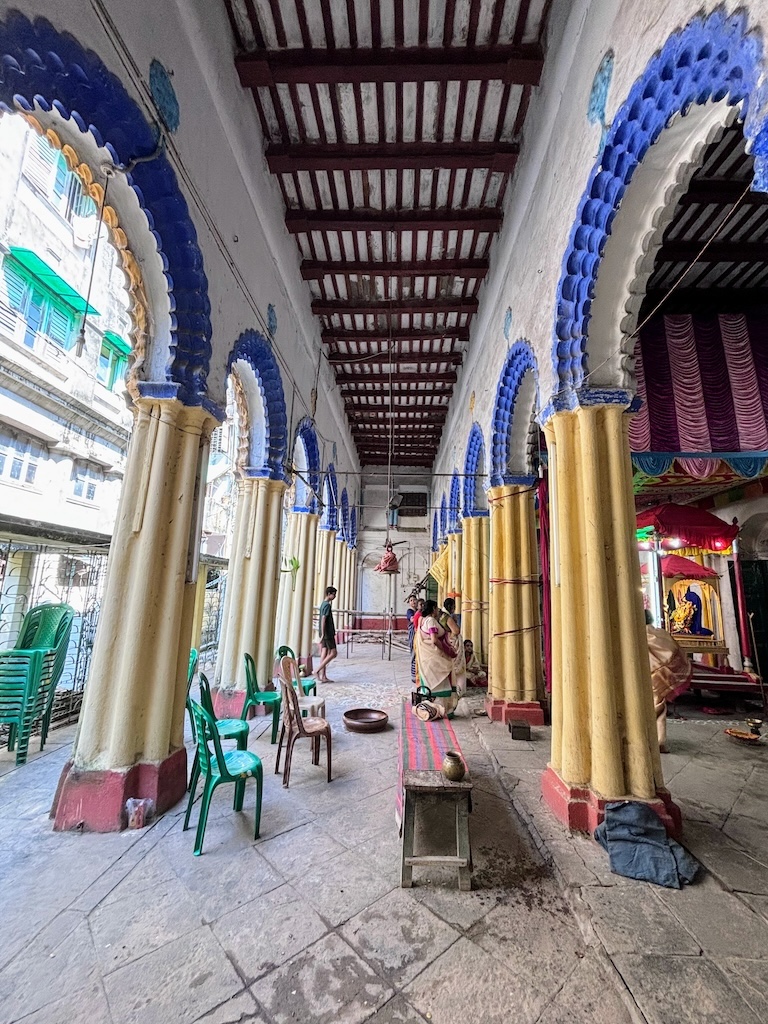
Dewanji Barir Thakurbari of 3/1, Hidaram Banerjee Lane, Bowbazar is very old. You can easily determine its age if you look at the massive thakurdalan. The seven arches have received fresh coat of paint. It’s rare to see such a thakurdalan with seven arches. There are stucco works on the top. Its adds beauty to this dalan. The goddess is worshipped as Karunamoyee. There are three rooms connected with this grand dalan. On your left Gopinath Jiu, Radhika and salagramsila are worshipped.
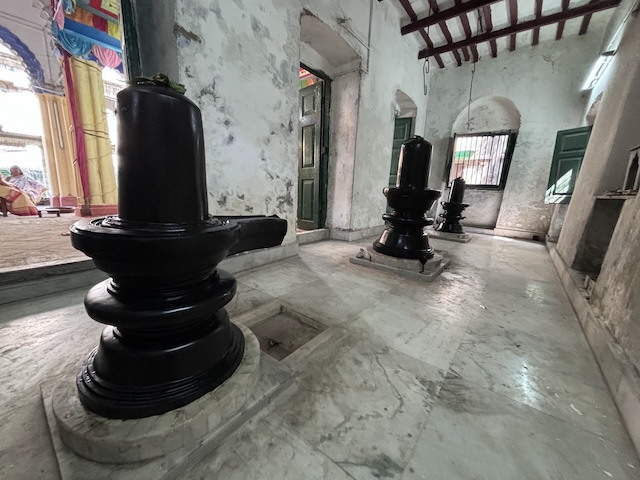
The middle one is comparatively a bigger one where three Shiva lingas are worshipped. The room on the right is the place where Maa Durga and Annapurna along with other deities. I was told by a senior family member that this puja is very old – it has been continuing for more than three centuries. Kumari Puja and dhuno porano are followed here. I was told that the puja is held here following the Shakta rituals. Another thing I noticed here is a total of sixteen (eight on each side) big pillars on which this natmandir rests. All pujas are held here including Kali Puja. At the extreme right there is a room reserved for preparing the bhog.

Devi Durga is worshipped in a wooden singhasana in the middle of this massive dalan during the days of the puja. The idol is made of astodhatu. Lakshmi, Saraswati, Kartick and Ganesh are absent. The temple remains open daily in the morning and in the evening. A visit to this thakurbari will definitely take you to the bygone days. I was completely mesmerised at this massive structure.

Nilmoni Dey Thakurbari of 45, Hidaram Banerjee Lane was founded by Nilmoni Dey on 15th Baisakh, 1304 Bangabda, ie April, 1897.
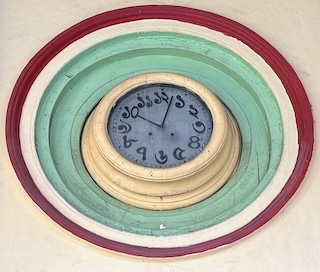

Durga Puja is performed here following the Baisnab rituals. The idol of Goddess Durga is made of astodhatu. Apart from Durga Puja the other festivals which are celebrated here are Jagadhatri Puja and Rathayatra. A unique feature of this idol is the chalchitra which depicts the patachitra. The puja starts here from pratipad in the ghat. Dhuno porano is practiced here after Sandhi Puja. Another thing which drew my attention is a large wall clock at the entrance with Bengali dial and the same is in running condition.
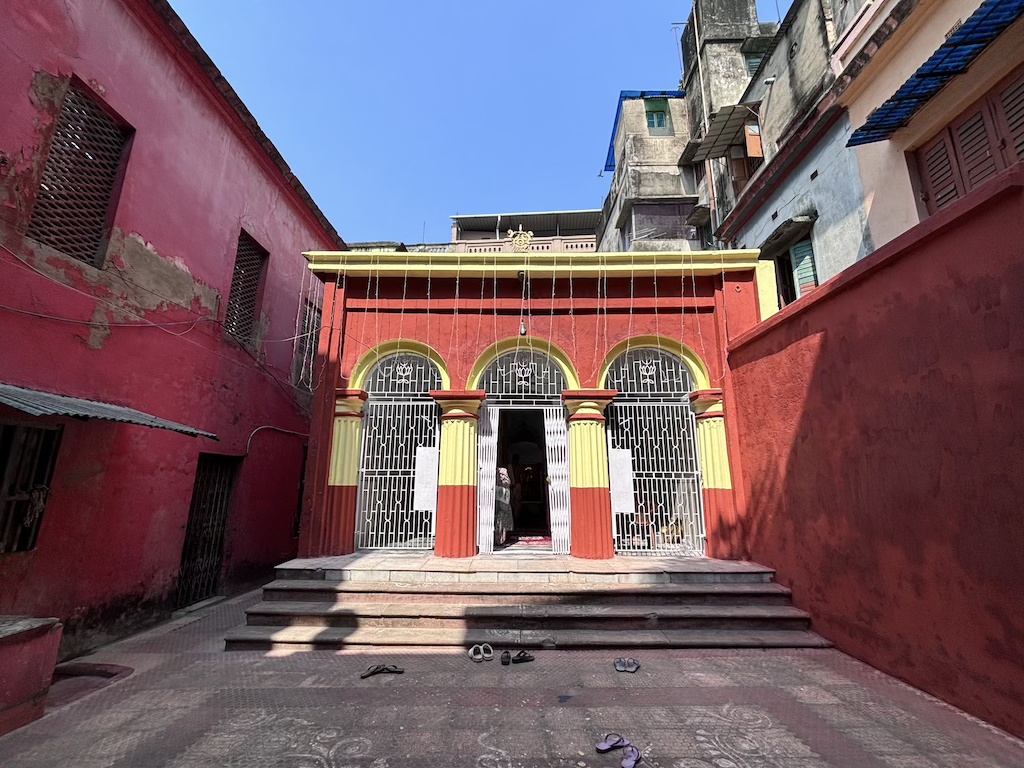
Durgabati of 69, Kali Datta Street, Kolkata – 5 houses a thakurdalan which was founded by Radha Madhav Datta in 1292 as per Bengali calendar (1885).
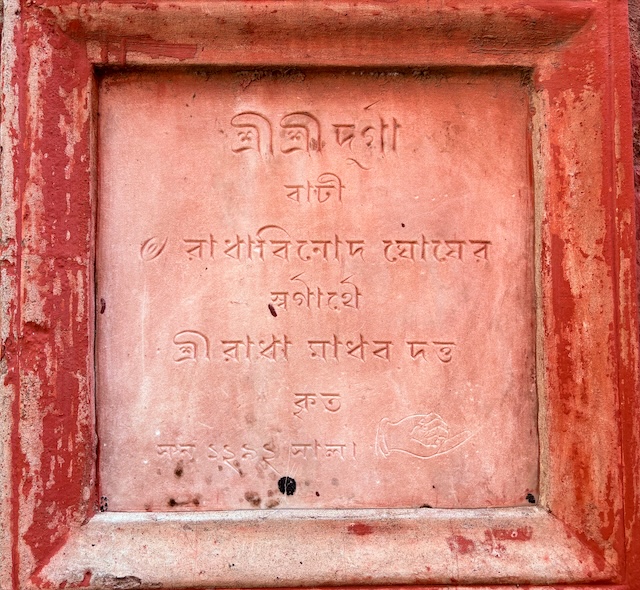
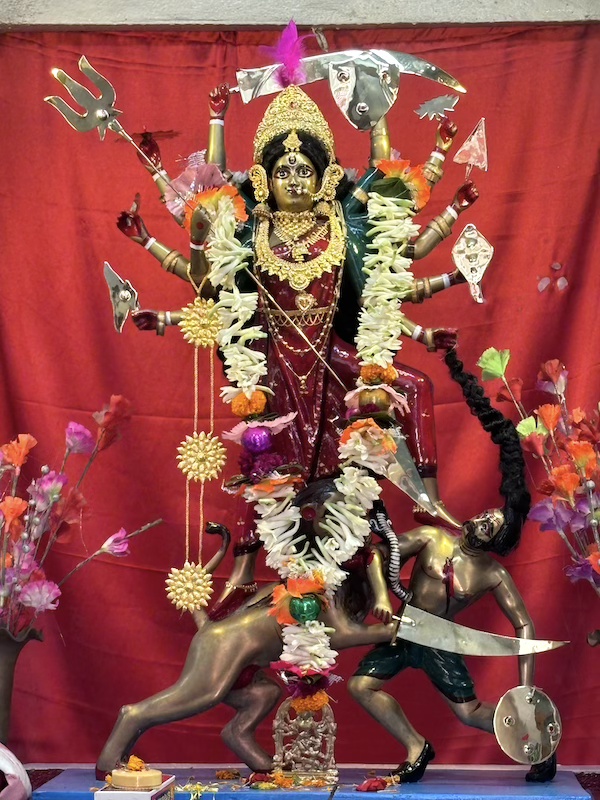
I found an old stone plaque at the entrance to this house. Maa Durga is worshipped round the year but special puja is held twice a year – during the time of Durga Puja and during Annapurna Puja. The puja is held here following the Baisnab rituals. The thakurdalan got a fresh coat of paint during the time of Durga Puja. I visited this house twice. In my first visit I could not take the photograph. This time when I went there, I found Saptami puja was going on and I found the family members there. At that time the arati was going on. As because the goddess is worshipped here round the year, so there is no ritual of bisarjan or immersion.
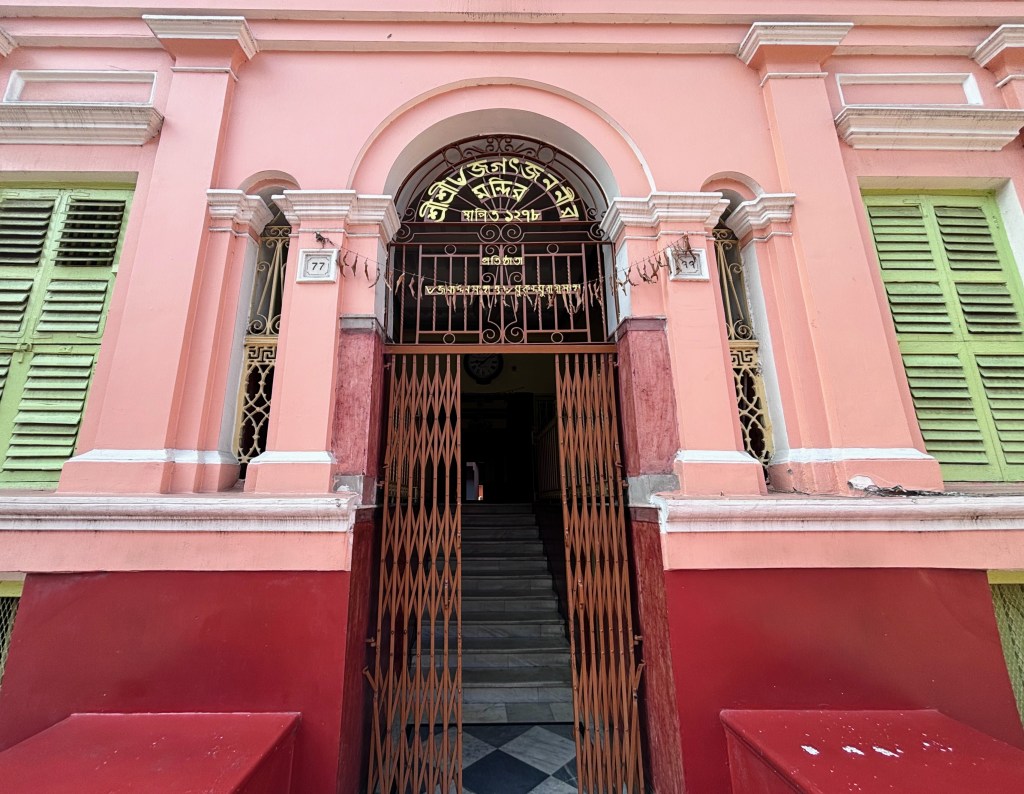
Jagat Janani Mandir of 77, Manicktala Main Road was founded in 1278 Bangabada ie, 1871 as per Gregorian calendar by Janardan Saha and Mukunda Murari Saha. It is beautiful and well maintained.
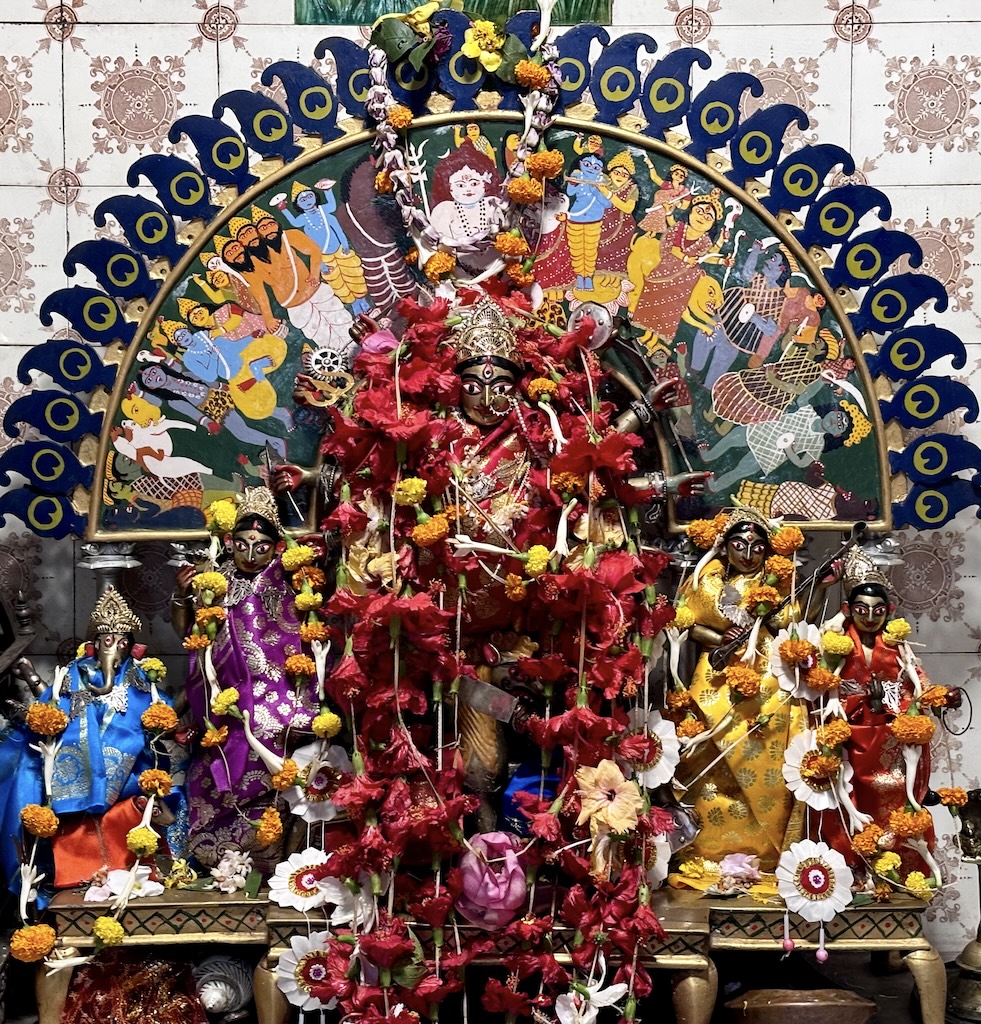
A flight of marble stairs will lead you to a beautiful natmandir and on the left is a temple sanctum where Maa Durga is worshipped along with narayan sila. The idol is made of astodhatu. A close look at the chalchitra will reveal the appearance of Lord Shiva in the centre together with other gods and goddesses. Maa Durga is present here with Lakshmi, Saraswati, Kartick and Ganesh. When I went there this morning I was told by the priest that the main festival here is Basanti Puja which is celebrated here for four days with great pomp and splendour.
Special thanks to Shri Shilajit Ray.
Date of posting: 21st October, 2023.

 Blog of Kinjal Bose