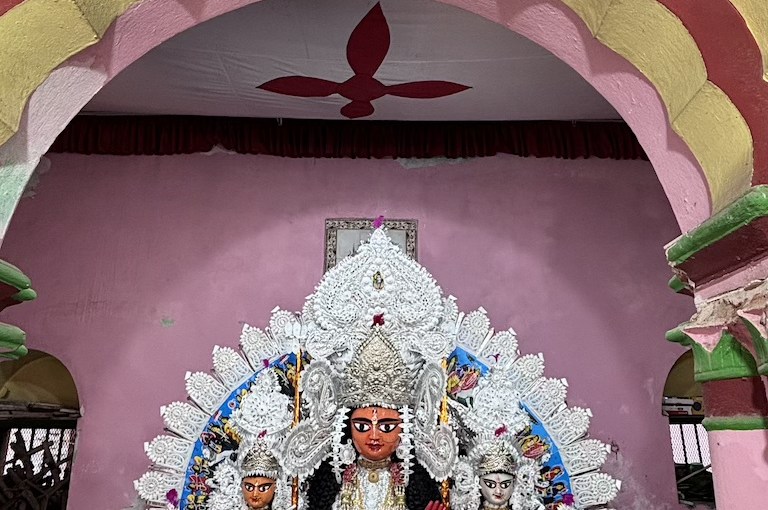
Rajbalhat, a town in Jangipara block of Serampore subdivision of Hooghly district is named after Devi Rajballavi. It is also famous for handloom (tant) industry along with Dhaniakhali, also in Hooghly. That apart the town has a number of temples – Sridhar Damodar Temple, Radhakanta Temple along with the temple of Rajballavi.
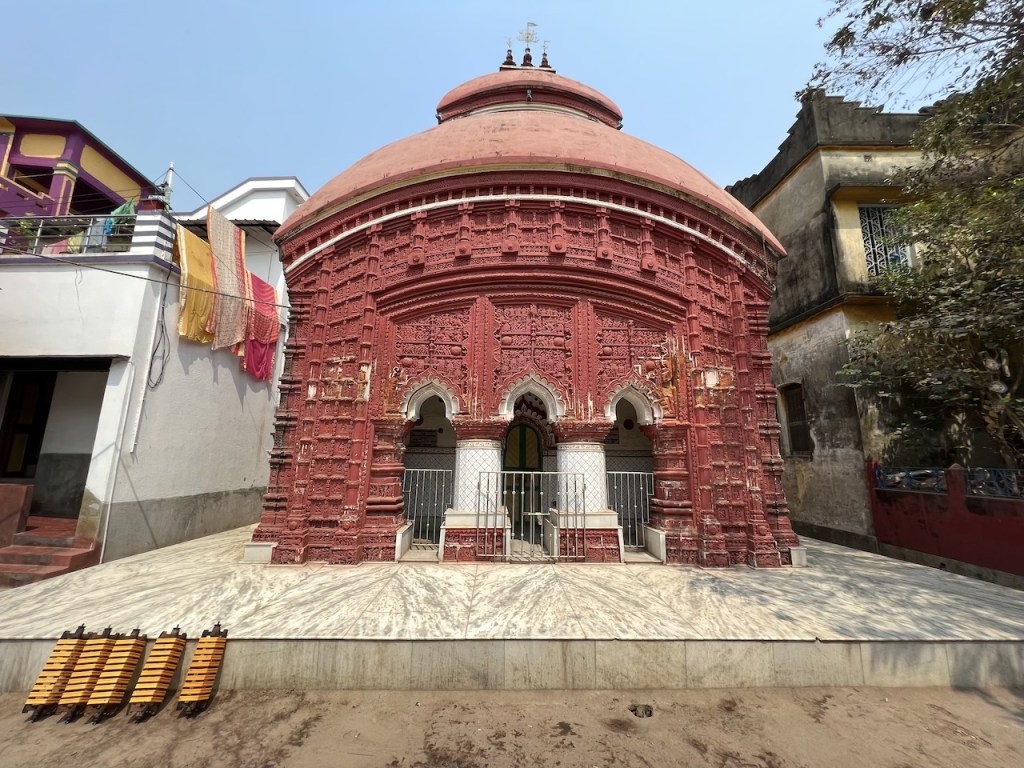
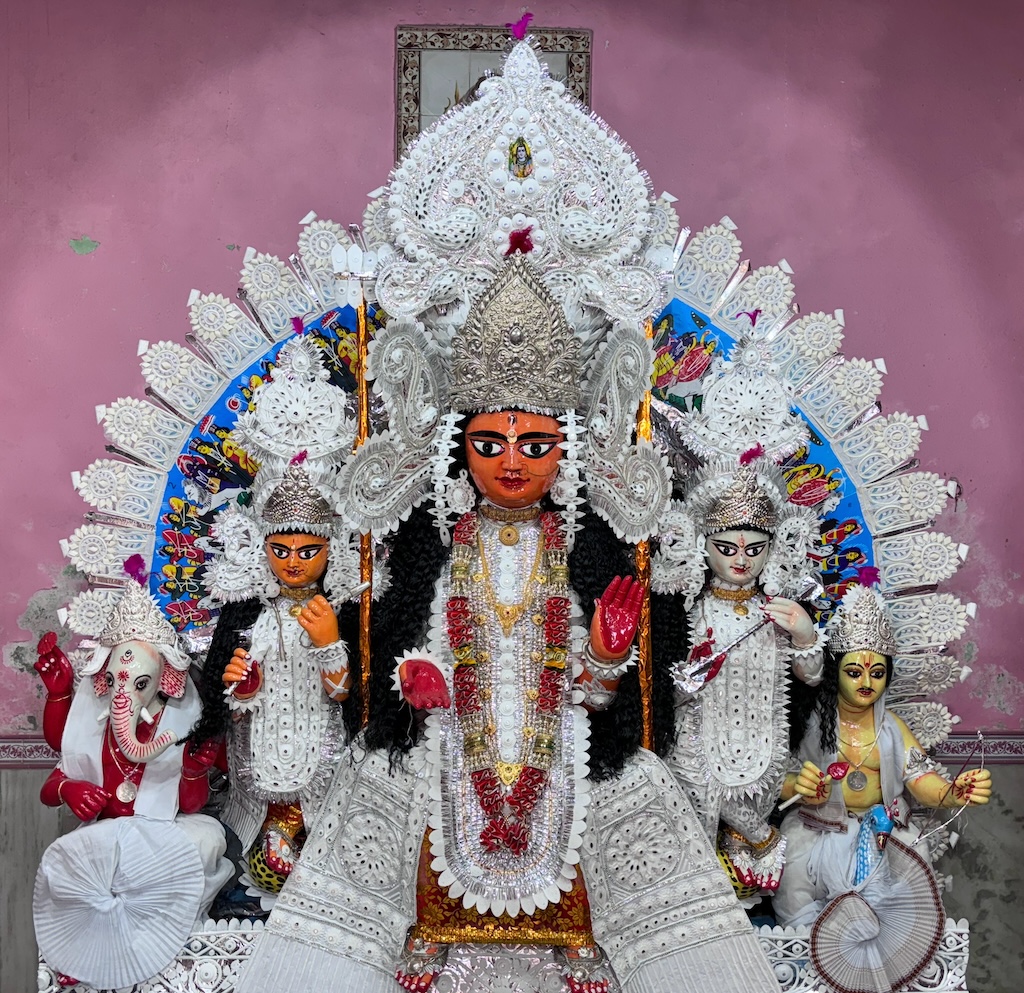
I had visited the town earlier in March this year. Today I decided to visit it again on my way back from Aatpur. The distance is roughly five kilometres from Radhagobinda Temple, Aatpur. This time I went by car and so I parked it a little away from Rajbalhat bazaar. It was a bright sunny afternoon. Just beside the aatchala Sridhar Damodar Temple (founded in 1724) of Sil family there is a renovated dalan with a natmandir belonging to the same family. Here Maa Durga is worshipped as Avaya Durga. The idol is unique and exceptional. I have never come across this type of protima earlier. Enquiring about the same I came to know that when the artist was trying to draw the trinayan of the idol he could not do so as because each and every time he was trying to draw, a fly came and sat at the tip of the brush. As a result of which the trinayan could not be drawn. Thereafter, a fly was drawn in place of trinayan of the goddess. So the goddess has two eyes.
The puja is more than 450 years old. It was started by Lambodar Sil. The Sils were basically the residents of Atghara in Khanakul. That area was flood prone and, therefore, Lambodar Sil came here and started living in Rajbalhat. This family puja was performed according to Sakta rituals. Animal sacrifice is performed on all the days of the puja including Sandhi Puja. There is no practice of kumari puja here but the ritual of dhuno porano is performed during the days of the puja.
The kathamo puja is held on Janmastami and the idol is prepared in this dalan. One thing I noticed is the colour of the Durga idol. It seemed to me that the colour of the face of the goddess is like the colour of the stem of siuli flower. This flower blooms during the time of autumn and therefore it is synonymous with Durga Puja. The goddess has neither lion nor mahisasur. It has two hands instead of ten. Avaya Durga always has two hands. Two sakhis – Jaya and Bijoya are there by the side of the goddess. Another thing to watch is the chalchitra. Just look at the dhotis of Ganesh and Kartick. Isn’t it unique? The shola work along with chalchitra adds beauty to this unique idol of Goddess Durga.
Going there: Take the Howrah-Tarakeswar local and get down at Haripal station. From there either you can board the crowded trekker or simply reserve an auto or a toto and reach Rajbalhat. It can also be reached by road from Kolkata.
Date of posting: 20th October, 2023.

 Blog of Kinjal Bose
Devi Rajballavi is a symbolic representation of a princess or noblewoman who is devoted to the goddess Devi, particularly during the Navaratri festival. These young girls or women play a significant role in the festivities, embodying the qualities associated with the goddess and serving as a source of inspiration for other devotees.
LikeLike